
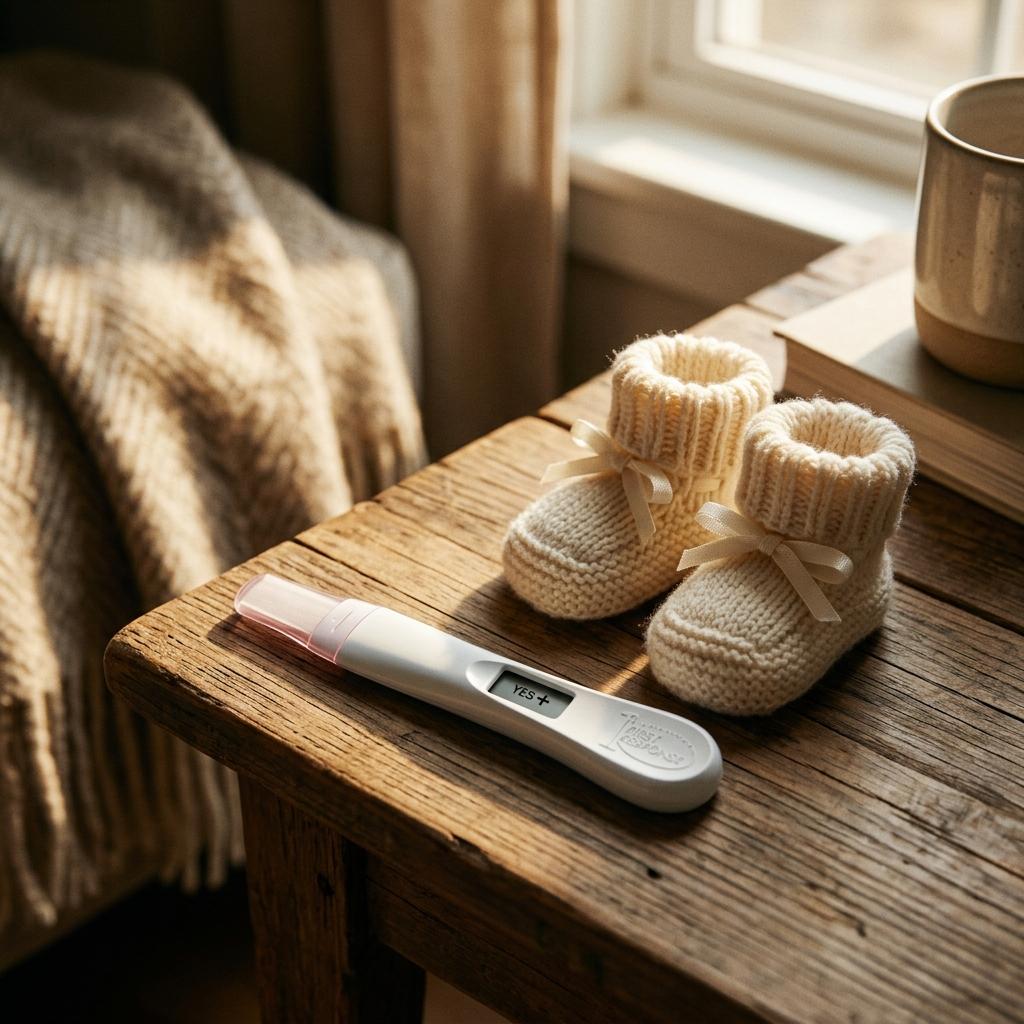
Are home pregnancy tests often wrong? (Yeoksam Station OB/GYN)
When home pregnancy tests show faint lines or inconsistent results, we've summarized the reasons for errors and the optimal timing for accurate testing.
You've probably experienced the unease of checking a home pregnancy test when your period is late, even after seeing a result. While home pregnancy tests are convenient, results can vary depending on the timing of the test and how it's used. If the result is ambiguous, it's safer to reconfirm at an OB-GYN clinic.
How Do Home Pregnancy Tests Work?
Pregnancy tests detect a hormone called hCG in urine. hCG is a pregnancy-related hormone that begins to be secreted after a fertilized egg implants in the uterus.
Here's how it works:
- When a fertilized egg implants in the uterine lining, hCG secretion begins.
- Antibodies within the test strip recognize the hCG excreted in the urine.
- If detected above a set threshold, it's indicated as positive, i.e., two lines.
The key is that hCG levels must be sufficiently high for an accurate positive result to appear. Even with pregnancy, if the test is performed too early, the hCG level might be low, leading to a faint line or a seemingly negative result.
Why Are Results Inconsistent?
In the clinic, we see many people who are anxious because their test results vary each time. Results that feel like errors with home test kits are mostly reported to be associated with the following situations:
Since there are many variables that can affect the results, it's necessary to reconfirm under controlled conditions rather than concluding based on a single result.
How to Test for Higher Accuracy?
Even with the same test kit, paying a little attention to the usage method can help increase reliability.
- Test after your expected period date.
- Use the first morning urine, which has the highest concentration of the day.
- Check the test kit's expiration date before testing.
- If the result is ambiguous, retest under the same conditions after 2-3 days.
- If still uncertain, consult an OB-GYN.
If you want to confirm pregnancy earlier and more precisely than with a urine test, a blood hCG test can be helpful. Blood tests can detect even low levels that urine tests might miss, providing a basis for judgment when results are ambiguous.
If you're concerned about testing timing and pregnancy planning, you can assess your body's condition and determine a direction through Pre-Pregnancy Care or Contraception Consulting. If the results are confusing and you don't know where to start, you can inquire via chat right now.
Home Test Results: When Should I Go to the Doctor?
In the following cases, we recommend seeking medical consultation rather than relying solely on home test results:
- When a positive result is accompanied by abnormal symptoms like bleeding or abdominal pain.
- When the result is negative, but your period continues to be delayed.
- When results vary with each test.
- When you're curious about gestational age or whether implantation has occurred within the uterus.
Since delayed periods can also be caused by factors other than pregnancy, if accompanied by recurrent cycle irregularities, it's advisable to investigate the cause through Menstrual Disorder Care. If you're curious about your overall body condition, including pregnancy status, you might also consider a Well-Woman Checkup or General Consultation.
What Happens After Early Pregnancy Is Confirmed?
Once pregnancy is confirmed by a home test or blood test, the next steps involve calculating gestational age, performing an ultrasound, and counseling on health status. Confirming normal implantation within the uterus is a particularly crucial part of the early stages.
While home pregnancy tests are convenient as a first-line screening tool, they are not 100% accurate in all situations. If results are uncertain or your period continues to be delayed, seeking confirmation through accurate tests and consultation is the way to gain peace of mind.
Dr. Eun-Jin Lee, Chief Director (Specialized in OB-GYN at Samsung Medical Center, Regular Member of the Korean Society of Obstetrics and Gynecology, Regular Member of the Korean Society of Menopause) Dr. Eun-Jin Lee's Profile First Published 2025-11-19 / Last Reviewed 2026-06-17
Interpretation of test results and accurate diagnosis vary individually; please confirm through consultation with an OB-GYN specialist.
What the article can't answer, a consultation can
Symptoms vary widely; please confirm with an OB-GYN specialist.